
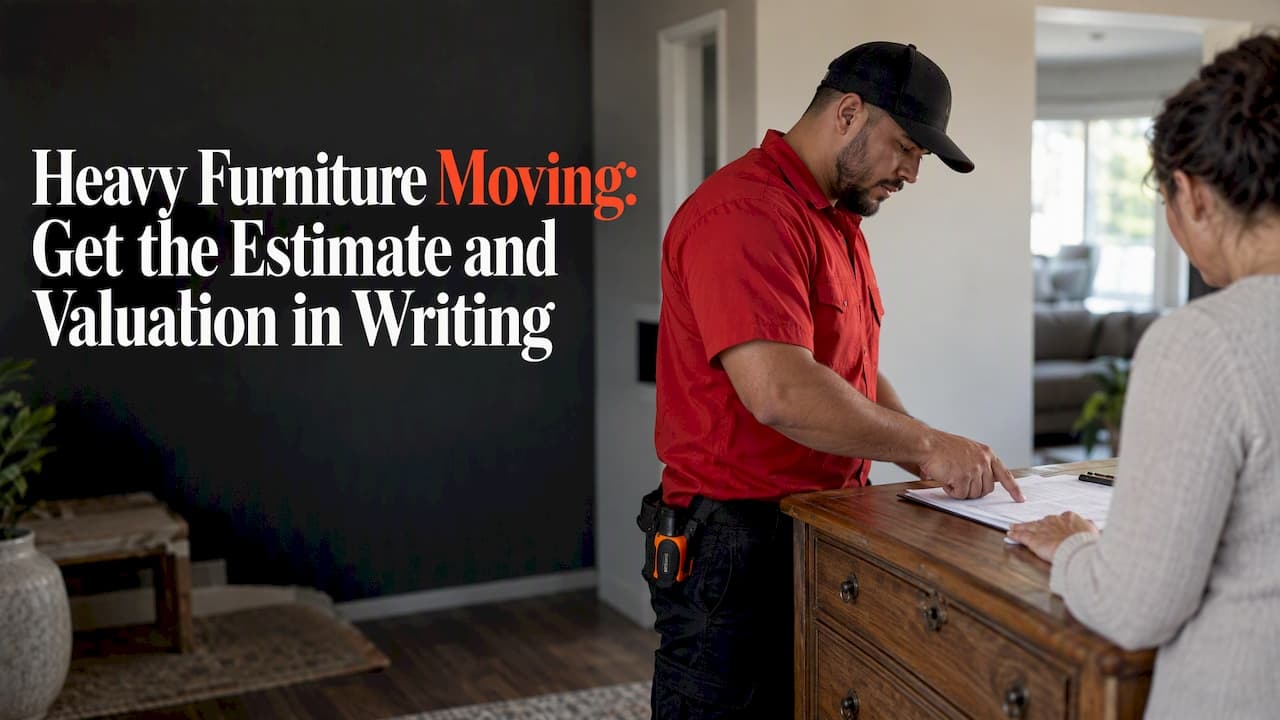
If you need a heavy or awkward piece moved, hire a professional crew rather than attempting it yourself, and get a written estimate along with the mover's valuation option before move day. Give the crew accurate measurements and access details in advance so there are no surprises on arrival. That one step prevents most of the delays, damage, and billing disputes that come up with heavy furniture.
TL;DR:
- A single bulky item typically costs $70 to $600 or more; stairs, long carries, distance, specialty equipment, and emergency dispatch can raise the final bill.
- Federal rules require movers to release goods after you pay somewhat more than a nonbinding estimate, delaying remaining charges for at least 30 days.
- Released Value pays only 60 cents per pound per item, so choose Full Value Protection for valuable pieces and document existing damage before pickup.
- Measure furniture and every doorway, hallway, and stairwell, photograph existing damage, empty drawers, and confirm parking or elevator access before the crew arrives.
- Before booking, require a written estimate and valuation terms; reject movers who demand full cash upfront or whose paperwork does not match the quote.
Table of Contents
- Why hire pros for heavy furniture moving
- What professional heavy-furniture movers do on move day
- How to prepare your furniture and space before the crew arrives
- Pricing and estimates: binding vs non-binding and common cost drivers
- Insurance and valuation options: choosing adequate protection for heavy or valuable pieces
- How to choose and book the right heavy-furniture moving crew
- Author perspective and why an owner-dispatched, insured local crew can matter
- Get a written estimate from WE DO CREW
- FAQ
- Sources
- Where to verify the rules yourself
Why hire pros for heavy furniture moving
Heavy pieces fail in predictable ways: a dropped corner cracks a stair tread, a pinched finger ends an afternoon, a scraped doorway becomes a repair bill. A trained crew brings the lifting technique and equipment that make those outcomes rare.
- Proper lifting straps, dollies, and team coordination cut the injury risk that comes with awkward weight distribution.
- Door jambs, floors, and stair rails stay protected because the crew pads and plans the route before anything moves.
- Specialized gear, like piano boards or appliance dollies, handles weight and shape that household tools cannot.
Some items are simply not DIY candidates: pianos, gun safes, marble-top furniture, and antiques with fragile joinery should always go to a professional crew.
What professional heavy-furniture movers do on move day
A competent crew does not just show up and start lifting. The process follows a sequence that protects your belongings and keeps the job on schedule.
- Walk the route first, checking doorways, stairwells, and elevator reservations for pinch points.
- Disassemble legs, tabletops, or doors where needed, then wrap each piece in moving blankets or shrink wrap.
- Secure items with straps and furniture dollies before loading them into the truck in a planned order.
- Create an inventory and bill of lading that lists condition, weight, and securement for transport.
Pro Tip: Ask the crew to walk you through their plan for your largest piece before move day. A mover who cannot describe how they will handle it is a mover you should keep shopping past.
The paperwork matters as much as the lifting. A proper order for service and bill of lading protects both sides if a dispute comes up later.
How to prepare your furniture and space before the crew arrives
A little prep work the night before shortens the job and lowers your bill, since most crews charge by time or by job complexity.
- Measure every piece and every doorway, hallway, and stairwell it has to pass through.
- Photograph each item's current condition before the crew touches it.
- Empty drawers, remove shelves, and bag loose hardware with labels for reassembly.
- Clear hallways of rugs, shoes, and small furniture that could trip someone carrying a load.
- Confirm parking, loading zone access, and elevator reservations ahead of arrival.
This kind of prep, measuring routes and removing loose contents before the crew arrives, is standard safe moving practice for anything bulky or fragile.
Pricing and estimates: binding vs non-binding and common cost drivers
Movers price heavy items two ways, and the difference matters more than most people realize. A binding estimate locks in the price regardless of actual weight, while a non-binding estimate can shift once the shipment is weighed.
Federal rules exist specifically because non-binding estimates can run over. If a non-binding estimate results in a final bill significantly higher than the original estimate, the mover must release your goods on payment of an amount somewhat above the estimate and delay billing for remaining charges for at least 30 days, according to FMCSA estimating rules.
Several factors push the final number up or down:
- Stair carries and long carries from the truck to your door add labor time.
- Specialty equipment for pianos or safes often carries its own line item.
- Same-day or emergency dispatch typically costs more than a scheduled slot.
Typical charges for moving a single bulky item range from roughly $70 to $600 or more, depending on size, stairs, and distance. The lowest quote on paper can still end up pricier once stair fees and minimums are added at delivery.
Insurance and valuation options: choosing adequate protection for heavy or valuable pieces
Valuation coverage is not the same as homeowner's insurance, and the option you pick determines what you get paid if something breaks.
- Full Value Protection (FVP) covers repair, replacement, or cash value for lost or damaged items, though movers can set deductibles and exclusions in writing.
- Released Value, the default option, caps liability at 60 cents per pound per article, which is rarely enough for a heavy dresser or antique sideboard.
- FMCSA guidance on loss and damage recommends FVP for anything of real value and spells out how each option works.
- Photograph valuable pieces beforehand and note any existing damage on the inventory so a claim has something to point to.
- Ask whether the crew carries separate third-party cargo insurance beyond the baseline valuation options.
File claims promptly. The documentation you gather before move day is what makes a claim fast instead of frustrating.
How to choose and book the right heavy-furniture moving crew
Picking a crew comes down to paperwork and plain questions. Treat any hesitation to answer as information in itself.
- Confirm you'll get a written estimate and a valuation option in writing before the job starts.
- Ask for proof of insurance and, for interstate moves, their U.S. DOT registration number.
- Ask about crew size, experience with similar pieces, available equipment, and the expected timeline.
- Confirm parking access or permit needs for your building or street ahead of time.
- Get a signed order for service or bill of lading listing every service and accepted payment type.
Pro Tip: Walk away from any crew that refuses a written estimate or demands full cash payment upfront. Those are two of the clearest signals the Operation Protect Your Move campaign warns consumers to watch for.
Mismatched paperwork is another red flag: a truck with no company markings, or a bill of lading that doesn't match the quote you were given, is a reason to call a different crew.
Author perspective and why an owner-dispatched, insured local crew can matter

Most complaints about heavy furniture moves trace back to communication, not lifting technique: a dispatcher who can't answer a direct question, a crew that shows up without the right equipment, a bill that doesn't match the estimate. An owner-dispatched model closes that gap because the person booking the job is the person accountable for it.
A crew that handles fragile antiques and commercial equipment alongside standard household moves tends to carry the right padding and straps on the truck by default, not as an upsell. Same-day dispatch and fully insured trucks matter less as marketing lines and more as the difference between a move happening on your schedule or someone else's.
— Eric
Get a written estimate from WE DO CREW
We handle local furniture and home relocation, convention and trade show logistics, regional freight, and commercial equipment moves, with direct owner communication on every job.

To get a written estimate, send us your item measurements, a few photos, and any access notes like stairs or parking restrictions. Request your quote through our booking page and we'll confirm scheduling.
FAQ
How much does it cost to move heavy furniture?
Costs for a single bulky item typically range from about $70 to $600 or more, depending on size, stairs, and distance. Add-ons like long carries or specialty equipment can push the total higher.
What's the difference between a binding and non-binding estimate?
A binding estimate sets a fixed price regardless of final weight, while a non-binding estimate can change once the shipment is weighed. Federal rules cap how much a non-binding bill can exceed the original estimate before delivery.
Should I buy Full Value Protection or stick with Released Value?
Full Value Protection covers repair or replacement cost for damaged items, while Released Value pays only 60 cents per pound per article. FMCSA guidance recommends FVP for anything valuable, like antiques or heavy case goods.
What should I prepare before the crew arrives?
Measure your furniture and every doorway or stairwell along the path, photograph each item's condition, and empty drawers of loose contents. Clear hallways and confirm parking or elevator access so the crew can start working immediately.
How do I spot a moving scam before booking?
Walk away from any mover who refuses a written estimate or demands full cash payment upfront, both flagged by the Operation Protect Your Move campaign. Mismatched truck markings or paperwork that doesn't match your quote are additional warning signs.
Sources
- FMCSA launches Operation Protect Your Move (US DOT briefing)
- Who should I hire to move furniture in your home? | HomeAdvisor
Where to verify the rules yourself
For official estimate rules, valuation options, and complaint tools, consult FMCSA's Protect Your Move resources directly before you sign anything.